Harewood book reviews
Romper Stomper
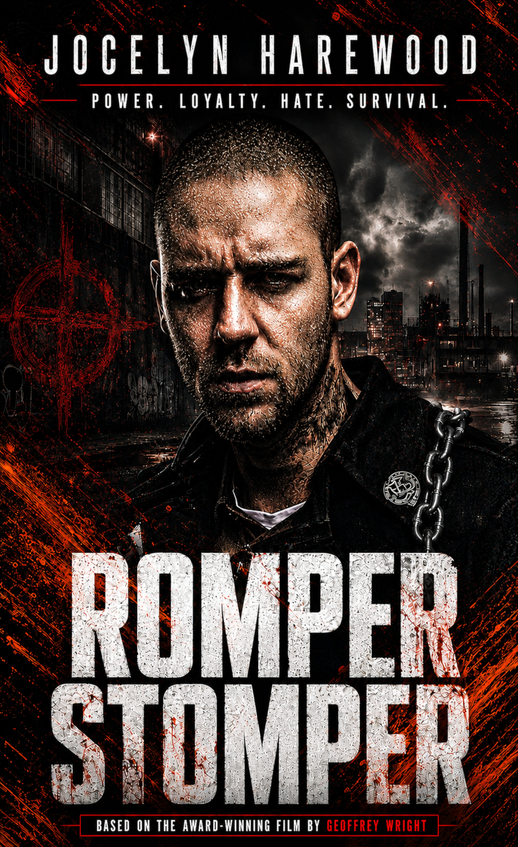 It was always a fairly risky business, it was incalculable whether Jocelyn had
enough sympathy to enable her to make characters in the novel her own. She has done
that tremendously well. I was rather surprised at the outrage over
Romper Stomper
.
The idea that the film promotes racist behaviour is nonsense. Besides the book is
different. Jocelyn has been able to let us get to know the girl Gabe, and we learn
more about the Vietnamese in order to make their characters work in the
book. – Michael Heyward (Text Publishing)
It was always a fairly risky business, it was incalculable whether Jocelyn had
enough sympathy to enable her to make characters in the novel her own. She has done
that tremendously well. I was rather surprised at the outrage over
Romper Stomper
.
The idea that the film promotes racist behaviour is nonsense. Besides the book is
different. Jocelyn has been able to let us get to know the girl Gabe, and we learn
more about the Vietnamese in order to make their characters work in the
book. – Michael Heyward (Text Publishing)
Metal Skin
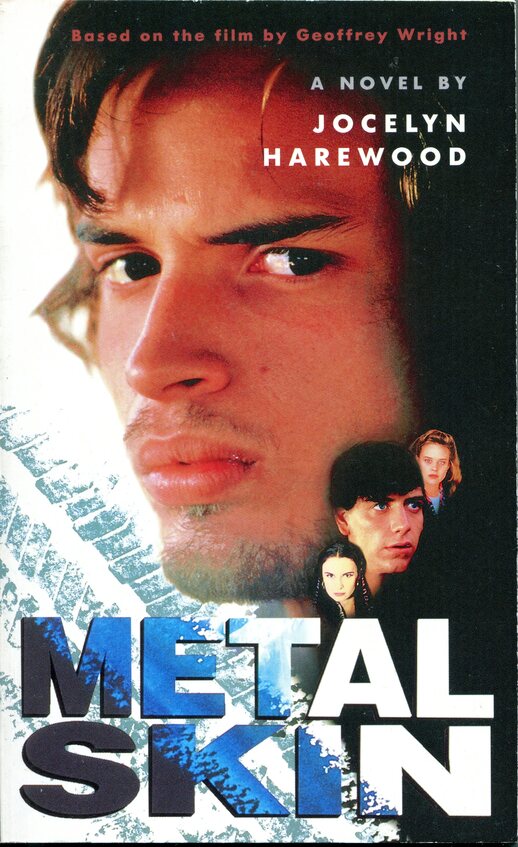 Hard-driving, quick-witted womaniser Dazey has what it takes to be a star, even if
it is in the industrial wasteland of suburbia. He is idolised by the aspiring
street-rodder Psycho Joe, loved by Roslyn, lusted after by Savina – a lethal mix.
Metal Skin, based on the recent Geoffrey Wright film, focusses on a world not far
removed from real life. Harewood has put the characters into perspective in a book
which almost smells of oil and petrol and burning rubber. – Chris Copas
Hard-driving, quick-witted womaniser Dazey has what it takes to be a star, even if
it is in the industrial wasteland of suburbia. He is idolised by the aspiring
street-rodder Psycho Joe, loved by Roslyn, lusted after by Savina – a lethal mix.
Metal Skin, based on the recent Geoffrey Wright film, focusses on a world not far
removed from real life. Harewood has put the characters into perspective in a book
which almost smells of oil and petrol and burning rubber. – Chris Copas
***
The film was criticised for being too hysterical, too confrontational and too cacophanous. Harewood incorporates all these qualities into her fast moving novel, while displaying a grasp of car talk that would floor many a motor mechanic. On the way, however, she finds time to explore other sides of the characters: Joe’s inner rage at his brain damaged father played against his love for what he has been; Savina’s destructive witchcraft and her attempts to see past the loser in Joe; and the all conquering Dazey’s moments of self awareness and higher motives. Harewood is now bringing her understanding of the teenage world into the realms of adult fiction. – Peter Dougherty (Diamond Valley News)
***
This novel explores the world of fast cars, selfish love and betrayal. The tragedy inherent in these damaged lives is too prominent to makes the novel light-hearted fun.s Rather this is a strong tale of those who are losers, and the way they cannot win, despite their best efforts. While the novel is well-written and explores the motivations and emotions of the characters very capably, it is also a very sombre view of the less successful adolescent members of our society. – SD (Reading Time)
The Killing of Genevieve & Other Stories
 ’Without Thinking’ takes on a common theme, a woman coping with the crises of family
life. What makes this story stand out is its irony and humour, combined with
Jocelyn Harewood’s confident storytelling about the details of domestic life and
domestic desperation. – John Hanrahan (Judah Waten Story Writing Competition)
’Without Thinking’ takes on a common theme, a woman coping with the crises of family
life. What makes this story stand out is its irony and humour, combined with
Jocelyn Harewood’s confident storytelling about the details of domestic life and
domestic desperation. – John Hanrahan (Judah Waten Story Writing Competition)
Young Adult Fiction
While being entirely believable, Jocelyn Harewood’s view of the world is not at all bleak. She documents with humour, frankness and compassion family and sexual relationships, school life, the intensity and volatility of teenage friendships. She shows young people in difficult, complex and often dangerous situations but tackling all this with courage and humour. We see the interaction between adults and young people and how they need and help each other. – Agnes Nieuwenhuizen ( The Age )
***
Harewood’s first novel, Voices in the Wash-House was one of last year’s funniest books. Harewood writes with humour and understanding about the lives, loves, fears and joys of teenagers. (Metro)
***
Jocelyn’s books sparkle with teenage energy, humour and dialogue. Her first work, Voices in the Wash-House , was shortlisted for the Vic. Premier’s Literary Awards. (Popular Writing Forum)
***
The very Australian books about Peregrine Merritt are lively and engaging. They deal frankly with all the issues faced by the modern family. Perr appears to be a jokey character and that can be quite dismissive. However, Jocelyn Harewood is a much more careful writer than that. Perr is super-critical and cynical, but every now and then he drops his cool exterior and becomes insightful, doubtless without meaning to. Or another character prompts him to take himself a little more seriously. Now for book four? – Jonathan Appleton (rippa reading)
***
Harewood’s trilogy of novels are about the joys and heartbreak of being an adolescent. Peregrine, the hero, never feels responsible for his own actions, he never acknowledges the fact that cause and effect exist in the world. It’s his innocence that makes the books funny. So it’s like seeing things from the opposite direction. Harewood says, ‘I wanted to say all this stuff about how kids care about things and I used his voice. He’s so naive that he’s able to say anything. It’s at a very questioning time in their lives.’ – Meredith Costain (Pursuit)
Voices in the Wash-House
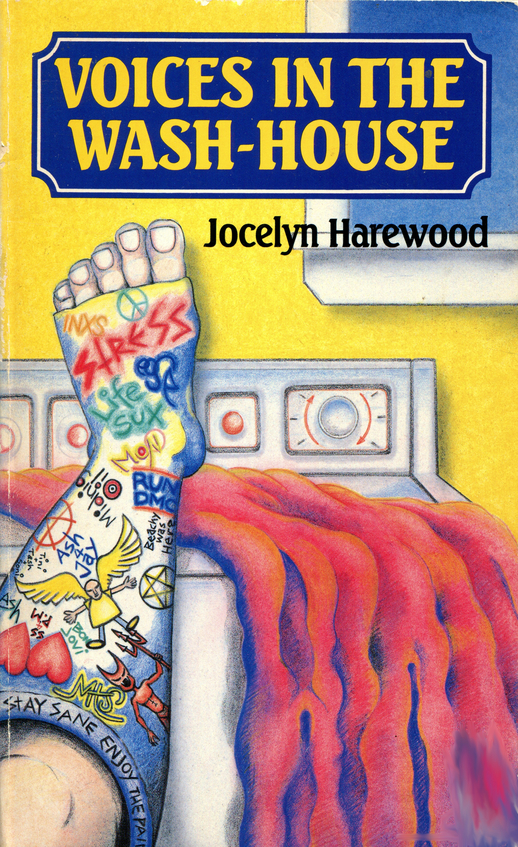 Light-hearted, with a lively use of dialogue, Harewood’s story focuses on a teenage
boy whose confinement to bed doesn’t lessen his involvement with the outside world.
(Alan Marshall Prize)
Light-hearted, with a lively use of dialogue, Harewood’s story focuses on a teenage
boy whose confinement to bed doesn’t lessen his involvement with the outside world.
(Alan Marshall Prize)
***
The back cover says that this book is for teenagers. It is also a survival manual for parents who are blessed with teenage people and don’t know it. This book raises many questions about the future. The four young people here want to know about their environment and their education, what can they expect from our ‘Great Leaders’. They are preparing themselves to take an active part in decision making processes. – Helen Dormer (Hidden Agenda)
Worms in the Night
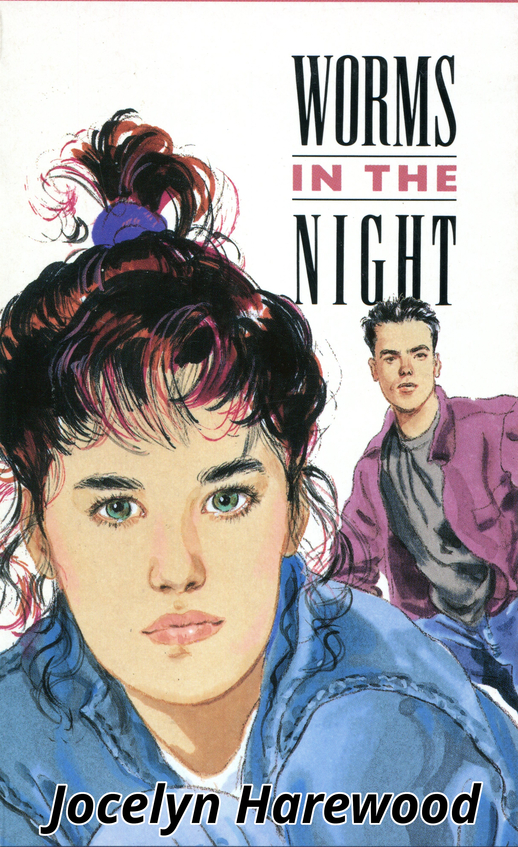 A delightful book that will establish Jocelyn Harewood as one of the new exciting
voices in fiction for young adult readers. This is a touching and humorous tale,
told through the eyes of fifteen year old Penny. It deals with serious topics in a
subtle and appealing manner. Through her hilarious ups and downs with her father
and friends, Penny learns about death, spelling and crosswords, how to dye your
hair, friendship, and all sorts of things teenagers need to know about. – Colleen
McGuiness-Howard (The Record)
A delightful book that will establish Jocelyn Harewood as one of the new exciting
voices in fiction for young adult readers. This is a touching and humorous tale,
told through the eyes of fifteen year old Penny. It deals with serious topics in a
subtle and appealing manner. Through her hilarious ups and downs with her father
and friends, Penny learns about death, spelling and crosswords, how to dye your
hair, friendship, and all sorts of things teenagers need to know about. – Colleen
McGuiness-Howard (The Record)
***
Jocelyn Harewood’s story of young Penny is an exploration of adolescent sex, of its thrills and its letdowns, of ecstasy one moment, and despair the next: ‘I’m sick of being in love. It’s nothing but waiting and feeling rotten.’ But she makes great efforts to help a dyslexic boy cope with his disability, with resounding success. The book is ‘grouse’, in the teenage slang of the book. – Ralph Elliott (The Canberra Times)
***
Jocelyn Harewood’s Worms in the Night , is a story about youthful vision and courage told with an engaging touch of humour. The use of four-letter words no doubt gives Worms a language relevant to today’s teenagers, but parents of younger readers should be aware of the contents. – Kerry Green (The Sunday Mail)
Movement on the Sofa
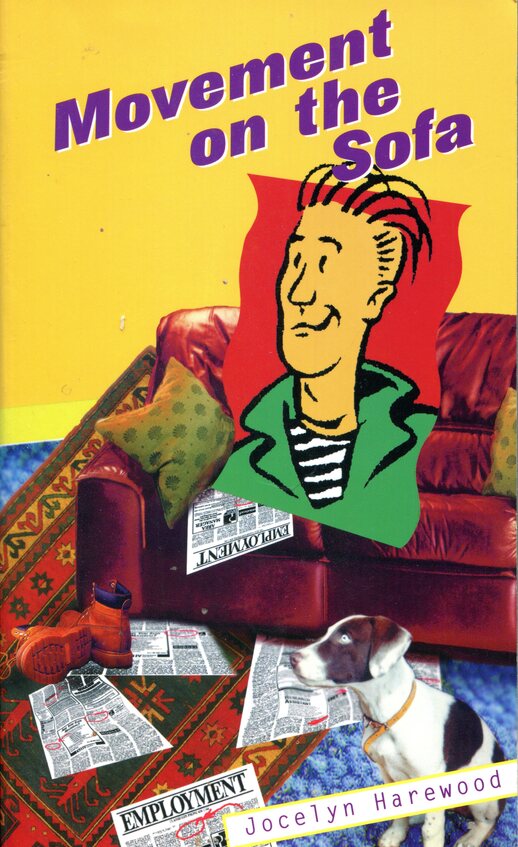 By the start of this novel, Perr has failed Year Eleven and wonders if it’s worth
going back. If he wants a job, he’ll need his driver’s licence. And what’s more,
Perr realises that his friends have changed. They aren’t enough anymore. Even
Sonya, his girlfriend, is different. What to do? Needless to say, he finds ways
and means as all the best heroes of fiction do. He’s up and about getting into
trouble and experiencing all that life has to offer. And the sofa is the venue for
exchanges of all sorts. While I enjoyed the comedy in short doses, I found the book
quite sad in many ways. I realised this is because the situations the characters
find they have to work through are realistic. – Jonathan Appleton (rippa reading)
By the start of this novel, Perr has failed Year Eleven and wonders if it’s worth
going back. If he wants a job, he’ll need his driver’s licence. And what’s more,
Perr realises that his friends have changed. They aren’t enough anymore. Even
Sonya, his girlfriend, is different. What to do? Needless to say, he finds ways
and means as all the best heroes of fiction do. He’s up and about getting into
trouble and experiencing all that life has to offer. And the sofa is the venue for
exchanges of all sorts. While I enjoyed the comedy in short doses, I found the book
quite sad in many ways. I realised this is because the situations the characters
find they have to work through are realistic. – Jonathan Appleton (rippa reading)
Stepping on Mussels
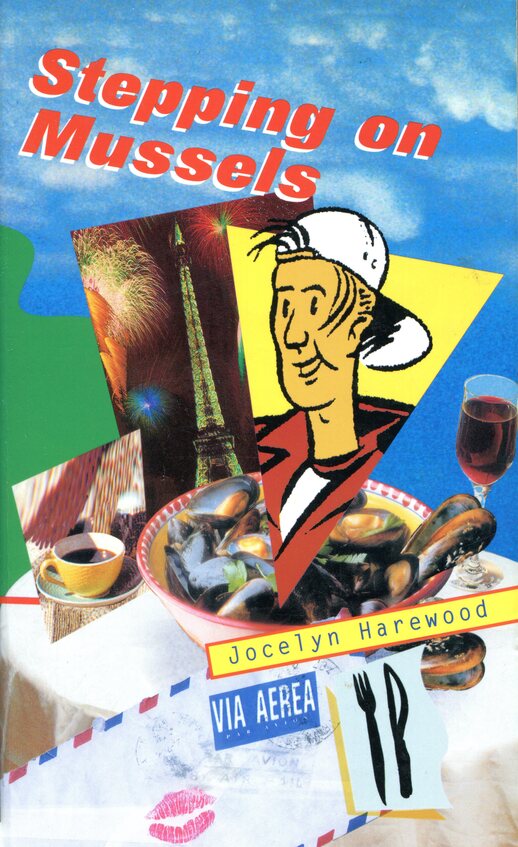 From the mundanity of urban life to the excitement and glamour of international
jet-setting, Jocelyn Harewood’s
Stepping on Mussels
is pacey and fun. It is the latest in Ms Harewood’s mirth-filled series on the
Merritt family. It begins with Peregrine’s tales of working woe and his attempts to
grow up, be responsible and get a job. But things take a turn for the better when
he finds himself heading for Europe to rescue his sister. What follow is a
delightfully funny account of two teenagers experiencing the delights of big cities,
bright lights, cafe life and quaint little towns. The insights into Europe from a
young person’s viewpoint are spot-on. (Heidelberger)
From the mundanity of urban life to the excitement and glamour of international
jet-setting, Jocelyn Harewood’s
Stepping on Mussels
is pacey and fun. It is the latest in Ms Harewood’s mirth-filled series on the
Merritt family. It begins with Peregrine’s tales of working woe and his attempts to
grow up, be responsible and get a job. But things take a turn for the better when
he finds himself heading for Europe to rescue his sister. What follow is a
delightfully funny account of two teenagers experiencing the delights of big cities,
bright lights, cafe life and quaint little towns. The insights into Europe from a
young person’s viewpoint are spot-on. (Heidelberger)
***
Peregrine Merritt, our hero (no yesterday’s hero, this one), is now an ex-student grappling with an un-caring labour market. He spins, swerves, dashes and speeds along in first person present tense till you have to gasp for breath from laughing. His sharp shots skip all unnecessary descriptive phrases and get right to the heart of the action. He presents a gangly adolescent male view of the world and lives life to the max, every minute filled with action, reaction and dramatic enjoyment that explodes off the page. What makes this book a cut above just entertainment is the ironic counterpoint of the author which informs us of Peregrine’s effect on others – we can empathise with those who love him to exasperation and yet the novel closes on note of change and an extraordinary meal, both significant of the next stage in his life, and I hope, part four of his adventures. – Linnet Hunter (ABR)
***
By the time I finished Stepping on Mussels I was smiling and sighing simultaneously, partly at Peregrine’s adventures and misadventures, partly at the memories of my first overseas trip that Harewood had evoked. This is a typically Australian rite of passage, with Peregrine taking his first transitional step out into the world, away from friends and family. The transformation of depressed, dope-smoking Skegs into the motivated lover Gary is both moving and convincing and Perr’s own changes, while less dramatic, are equally effective. This is a feel-good book, but one set among the gritty realities of everyday life. Read and enjoy. (Viewpoint)
***
This is the third Peregrine Merritt book. Poor Perr is trying to grow up, but somehow it hasn’t worked out yet. A rip-roaring yarn full of the energetic life of a bunch of teenagers, cafes and art galleries, foreign food, swimming, fluorescent condoms… Lots of action, fast dialogue, heaps of laughs as the teens bumble through life (and France). A good fun read for senior secondary students, and it isn’t necessary to have read the two earlier books although you can guarantee that enchanted readers will be begging you to purchase them. – HW (New Englander)
Spiked
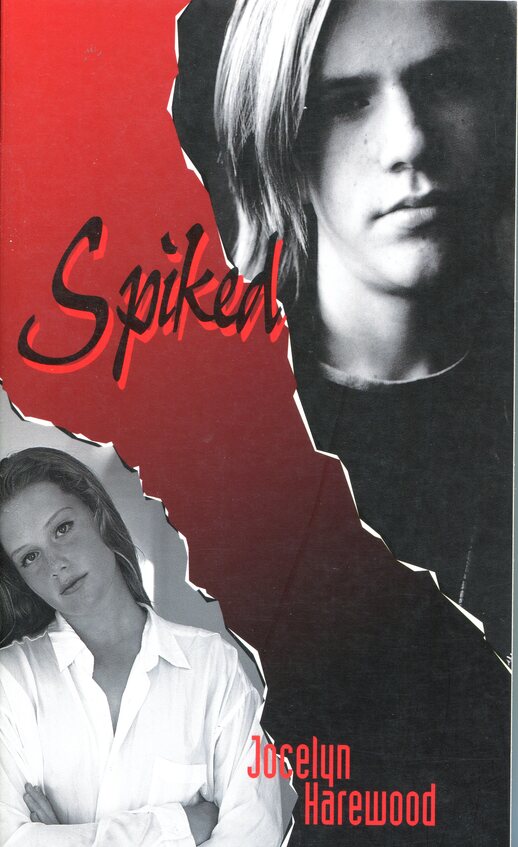 Vibrant and funny,
Spiked
is a rare insight into the hearts and minds of today’s teenagers and their parents.
It tells the story of Steven, a teenage boy with serious behavioural problems who
ends up on the wrong side of the law. The hero’s anti-social behavior is linked to
his fast-food diet. It is also a love story. It follow the budding romance between
Steven and his girlfriend Jenny. – Jodie Haythorne (Diamond Valley News)
Vibrant and funny,
Spiked
is a rare insight into the hearts and minds of today’s teenagers and their parents.
It tells the story of Steven, a teenage boy with serious behavioural problems who
ends up on the wrong side of the law. The hero’s anti-social behavior is linked to
his fast-food diet. It is also a love story. It follow the budding romance between
Steven and his girlfriend Jenny. – Jodie Haythorne (Diamond Valley News)
***
The opening sentence of Spiked plunges us straight into another of Jocelyn Harewood’s laconic, colloquial stories about Melbourne teenagers. Steven is subject to manic rages and the tension of his situation is heightened when he and Jenny fall in love. We also watch the ebb and flow of the people around them – parents, employers and Trent, the troubled boy who finds a harsher solution to his problems. The closing pages are as powerful as the opening ones and the book takes Harewood’s writing to a new level of effectiveness. – Jane Ponting (Viewpoint)
© 2026 Jocelyn Harewood